

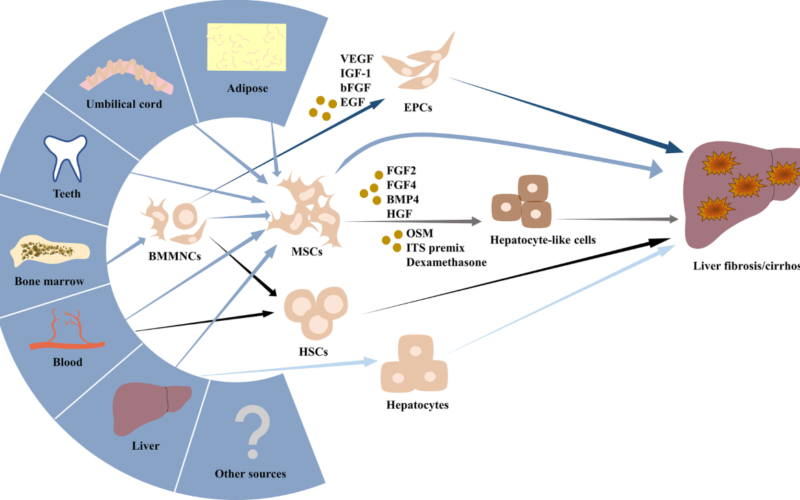
Cirrhosis of the liver remains one of the most serious chronic diseases in the world. According to international medical organizations, more than one million people die each year from complications of cirrhosis. The main problem is that healthy liver tissue is gradually replaced by scar tissue, causing the organ to lose its ability to perform its functions. Today, alongside traditional treatment methods, the use of cellular technologies is attracting increasing attention, and many patients are exploring the possibilities of stem cell treatment for cirrhosis as one of the promising approaches to liver restoration in cases of severe organ damage.
What Happens to the Liver During Cirrhosis
Cirrhosis develops gradually and often remains unnoticed in its early stages. Damaged liver cells are unable to fully regenerate, and connective tissue forms in their place.
Over time, this leads to the following consequences:
- the purification of blood from toxins deteriorates;
- the production of proteins and enzymes decreases;
- metabolic processes become disrupted;
- portal hypertension develops;
- the risk of liver failure increases.
Many patients experience constant fatigue, loss of appetite, weight loss, swelling, and a decline in overall well-being. This is why the search for methods capable of supporting liver regeneration remains one of the key challenges of modern medicine.
How Stem Cells Work
Stem cells possess a unique ability to participate in the body’s repair processes. Unlike ordinary cells, they can transform into various tissue types and release biologically active substances that stimulate regeneration.
The main mechanisms of action include:
- Reducing inflammatory processes.
- Supporting the repair of damaged tissues.
- Improving blood microcirculation.
- Stimulating the activity of the liver’s own cells.
- Slowing the formation of new scar tissue.
It is important to understand that stem cells do not completely replace the liver and cannot instantly eliminate the consequences of a disease that has developed over many years. Their role is to create conditions that allow the organ to recover more effectively.
What Results Modern Research Shows
Over recent years, numerous clinical studies have been conducted on the use of cell therapy for liver diseases.
According to a number of international scientific publications, some patients demonstrated:
- improved blood biochemical parameters;
- reduced bilirubin levels;
- increased albumin levels;
- improved quality of life;
- reduced severity of cirrhosis symptoms.
Some studies indicate improvements in liver function within just a few months after the procedure. However, results can vary significantly depending on the stage of the disease, the patient’s age, and overall health condition.
Who May Benefit from Cell Therapy
Each case of cirrhosis is unique, so the decision to use cell therapy is made only after a comprehensive evaluation.
Candidates are most often assessed according to the following criteria:
- the degree of liver damage;
- the presence of complications;
- blood test results;
- coexisting medical conditions;
- overall physical condition.
Before treatment begins, laboratory testing, diagnostic imaging, and consultations with specialized physicians are usually performed.
It is especially important to consider that the possibilities for recovery are significantly limited in the terminal stages of the disease. In such situations, a physician may consider other treatment options, including liver transplantation.
Advantages and Limitations of the Method
Interest in cell therapy is associated with its potential to support the body’s natural regenerative processes. However, it is important to objectively assess both its advantages and existing limitations.
Potential advantages include:
- minimal invasiveness of the procedures;
- the use of natural recovery mechanisms;
- the possibility of combining it with other treatment methods;
- good tolerance among many patients.
At the same time, there are limitations:
- effectiveness may vary from patient to patient;
- additional long-term studies are needed;
- the method does not guarantee complete liver recovery;
- the outcome depends on the stage of the disease.
Therefore, professional consultation with a specialist and realistic expectations remain essential parts of preparation for treatment.
Cirrhosis of the liver is a complex disease that requires a comprehensive and long-term treatment approach. Modern stem cell technologies open new opportunities for supporting liver regeneration and improving patient outcomes. Although cell therapy is not considered a universal solution, research findings demonstrate its potential in addressing the consequences of chronic liver damage.